9 elements to appreciate next time you visit a Japanese garden.
Of all the garden styles, my favorite has always been the Japanese garden. I love how they are built around shape, texture and symbolism to create a tranquil retreat that inspires peaceful contemplation. Best time to go (in my opinion) is in the Fall when most other garden types have little of interest.
And that’s just what I did in 2019. Packed up the car and went on a road trip that included Nitobe Memorial Gardens at UBC, and the Portland Japanese Garden. Once this pandemic is over I’m looking forward to returning to both in different seasons to make more photographs, so stay tuned for that. For now, enjoy this introduction to the 9 key elements of Japanese garden design:
Stone
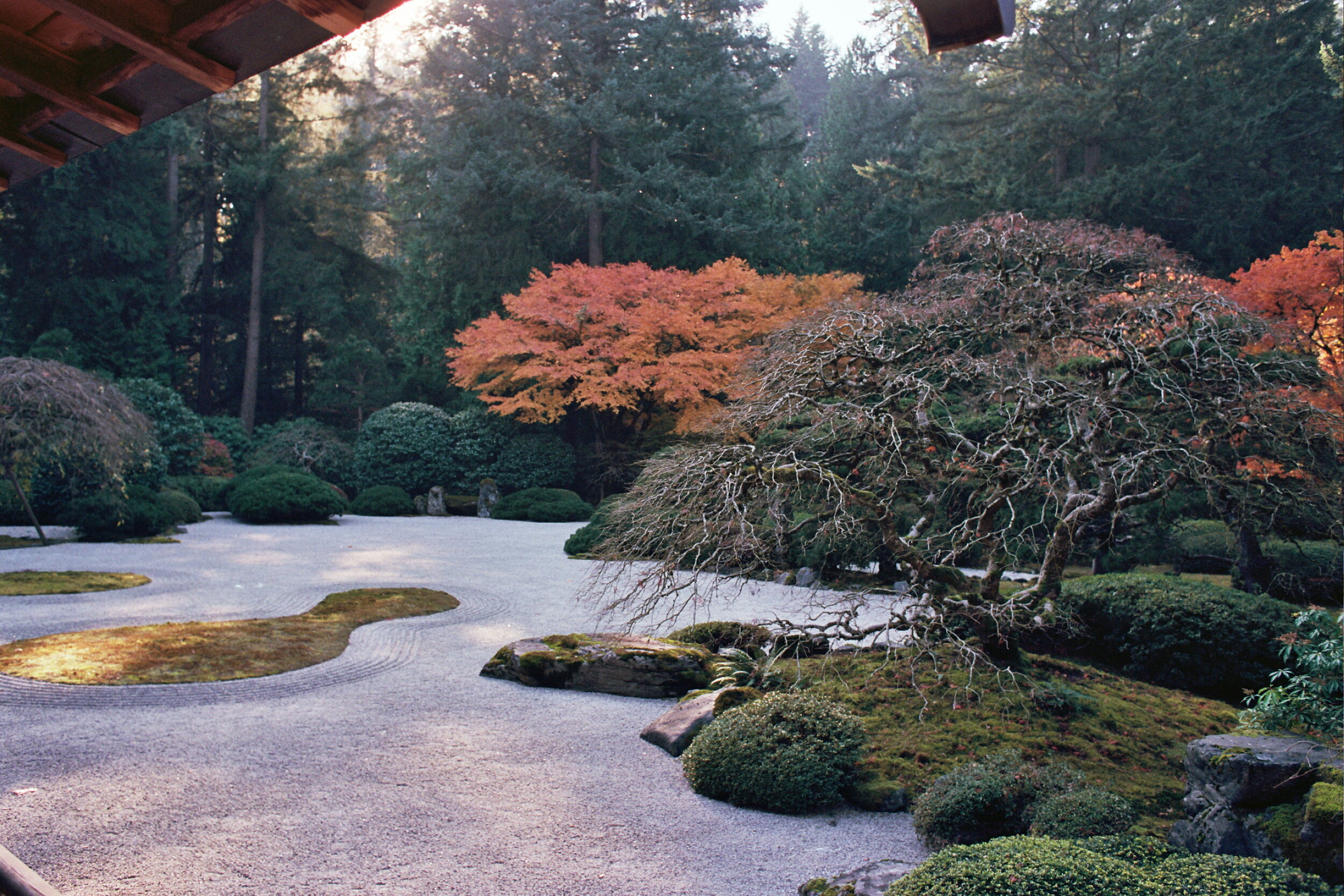
Stone is the most important element in Japanese garden design. Large stones are used for bridges and pathways, as decorative accents, and to symbolize mountains and hills. Smaller rocks and gravel line ponds and streams, and dry gardens (shown here in Portland) are comprised entirely of stones.
Water
Water is an integral component symbolizing renewal, calm, wonder and continuity in the hereafter. It is found in many forms, including tranquil ponds, trickling streams and waterfalls. In dry gardens, water is symbolized by raked gravel and sand. Pictured is the crystalline pond at the Nitobe Gardens at UBC.
Lanterns
There are four main types of stone lanterns: Tachi-gata or pedestal lanterns, ikeko-gata called ‘buried lanterns’, oki-gata the small, often portable lanterns, and yukiki-gata ‘snow viewing’ lanterns. They represent love, brightness and protection from evil.
Teahouse and Machai (Waiting Place)
The Japanese tea ceremony is an aesthetic and spiritual practice offering a sanctuary from worldly concerns. It inspires us to embrace harmony, respect, purity and tranquility. Essentially it is a reminder to stop and smell the roses. Pictured is a Machai or waiting place where one would wait for the tea ceremony.
Symbolism
Symbolism is woven into all elements of a Japanese garden, from stone and water features to
lanterns and bridges – adding layers of meaning for visitor interpretation. A classic example is
Turtle Island in UBC’s Nitobe Memorial Garden. It resembles the shape of a turtle, which is the
animal symbol of immortality, and rocks are used to depict its flippers, head and tail.
Resting place
Resting places are spread throughout Japanese gardens and are purposefully located to allow you to see the garden from a specific angle or to draw attention to an important element in the design. This was one of my favorite resting spots in the Portland Japanese Garden.
Variation in path materials
As I strolled through the Portland Japanese Garden, I noticed that the material underfoot was continually changing – from stone slab, crushed gravel and packed earth to stepping-stones and wooden bridges. I realized this is meant to keep visitors engaged and mindful of the present moment.
Karesansui (Dry Garden)
A true art form, dry gardens are miniature, stylized landscapes comprised entirely of stone. Larger stones are carefully assembled and arranged to symbolize mountains, islands and waterfalls. Gravel or sand is used to denote ponds and streams, and raked to represent ripples in the water. Shown here an impeccably composed dry garden in the Portland Japanese Garden.
Bridges & Islands
Islands are a long-standing component of Japanese gardens, as are the bridges that connect them. An island can be as small as a single stone outcropping or big enough to support buildings. They are also purposefully shaped, such as those built to resemble turtles and cranes, symbols of longevity and health. Bridges are built of wood, bamboo, earth or stone, and can be rounded, arc-shaped or in zigzags. Always in harmony with the surrounding nature, bridges are a great place to linger and take in the beauty of the landscape.